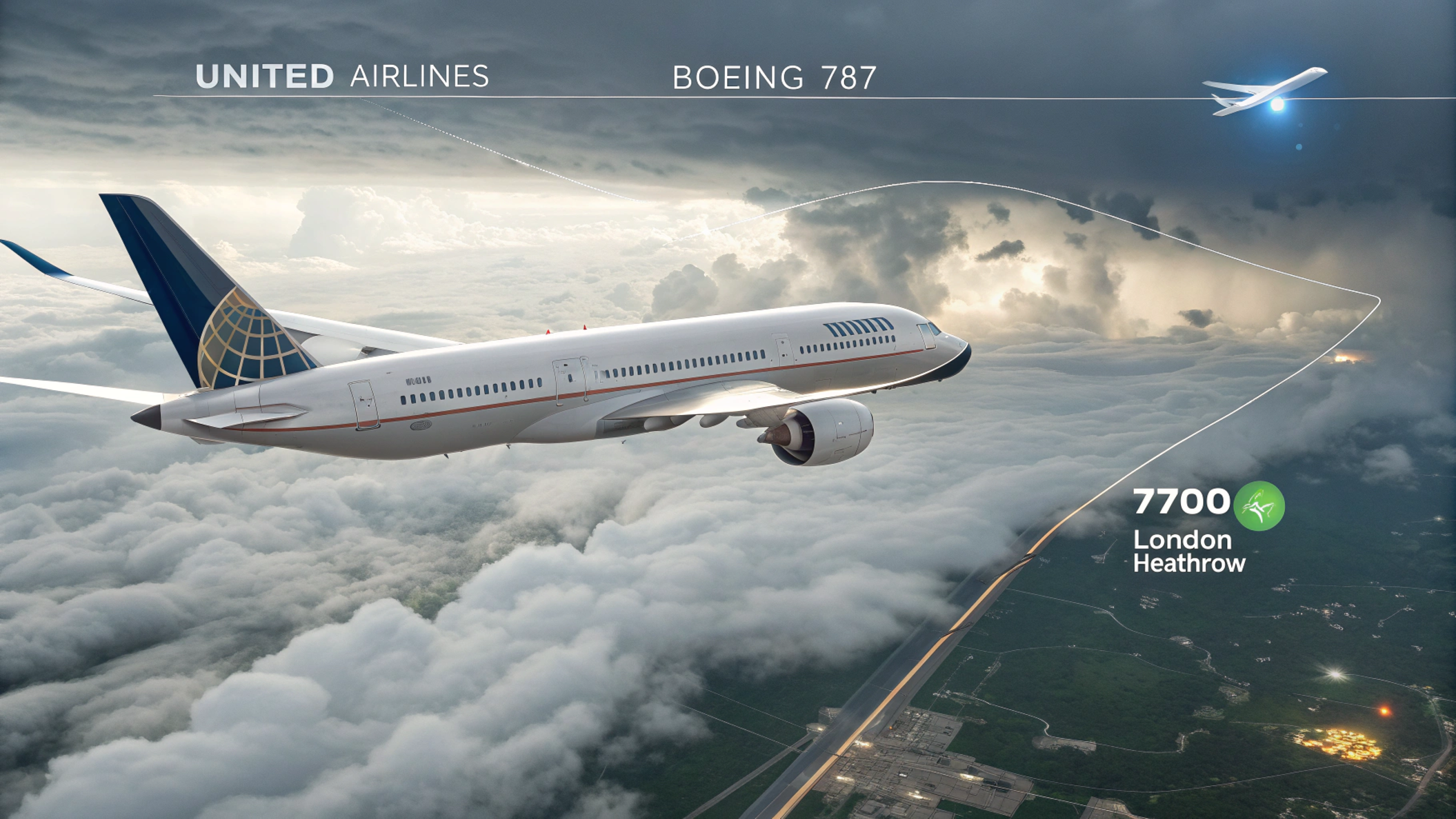
United Airlines flight UA770 emergency diversion
On May 27, 2025, United Airlines flight UA770 emergency diversion began a routine journey from Barcelona to Chicago aboard a Boeing 787 Dreamliner. However, midway through the flight, a potential cabin pressurization issue forced the pilots to make an emergency decision: divert the flight to London Heathrow Airport. This blog explains the events of that day, what caused the diversion, and what travelers should understand about emergency flight procedures.
Flight Progress and Issue Detected
The flight started as usual, with passengers settled in for the long haul. Once at cruising altitude (about 37,000 feet), the flight crew detected an irregularity in the cabin pressure system. Cabin pressurization is critical for passenger safety at high altitudes because it regulates the air quality and pressure inside the aircraft. Even minor warnings cannot be ignored as they may indicate serious risks. In aviation, safety is paramount, so the pilots took immediate precaution.
Emergency Declaration: Squawk 7700
Upon noticing the issue, the pilots declared an emergency using the transponder code “7700.” This mysterious number is well-known in aviation circles as an alert to Air Traffic Control (ATC) and nearby flights that the aircraft requires priority handling due to an emergency. This ensures the plane receives clearance for an expedited and safe landing process. Emergency services at the destination airport are also put on standby.
Why Heathrow?
Instead of continuing to Chicago, the pilots chose to divert to London Heathrow. Heathrow is one of Europe’s busiest and best-equipped airports for handling large aircraft emergencies. It has advanced technical resources for extensive aircraft inspections and maintenance. Its geographical location relative to the plane’s current position also made it the safest and most logical choice.
Passenger Experience During the Diversion
For passengers, the announcement of an emergency diversion can be unsettling. However, the United Airlines crew maintained calm and provided regular updates to keep anxiety at bay. Importantly, oxygen masks were not deployed, and the cabin environment remained stable throughout. Upon landing, passengers felt substantial relief but also faced logistical challenges such as missed connections and overnight stays. United Airlines promptly arranged accommodation, meals, and alternate flights to ease inconveniences.
Safety Systems Work at united airlines flight ua770 emergency diversion
No injuries occurred during this incident. Subsequent inspections suggested the issue might have been a faulty sensor reading rather than an actual pressurization failure. Aviation is a field where false alarms are treated with as much seriousness as genuine threats, exemplifying the industry’s robust safety culture. Early problem detection, quick decision-making, and safe diversion are reasons air travel remains one of the safest modes of transportation.
Post-Diversion Procedures
After a flight diversion, several processes take place:
- Technical Inspection: Engineers conduct thorough checks on the aircraft, focusing on the pressurization system and related sensors.
- Passenger Support: Airlines assist passengers with rebooking, accommodation, and meals during delays.
- Official Reporting: The airline submits a detailed incident report to regulatory authorities to ensure oversight and preventive measures.
Traveler Tips for Flight Diversions
Though diversions like UA770’s are rare, they underscore airline preparedness. Travelers should remember:
- Diversions are preventative, prioritizing safety over convenience.
- Large airports are selected for their capacity to handle emergencies efficiently.
- Calm and clear communication from the flight crew is vital to passenger reassurance.
The Safe Outcome
The United Airlines flight UA770 emergency diversion, although unexpected, was managed efficiently, resulting in a safe outcome. Passengers experienced disruption but were kept secure throughout. Such events underscore the importance of airlines prioritizing human life through swift and coordinated responses to potential risks. Safety, vigilance, and professionalism on the ground and in the air ensured that what could have been a crisis ended with reassurance.
Visit Inter-net-chicks.com
About the Author