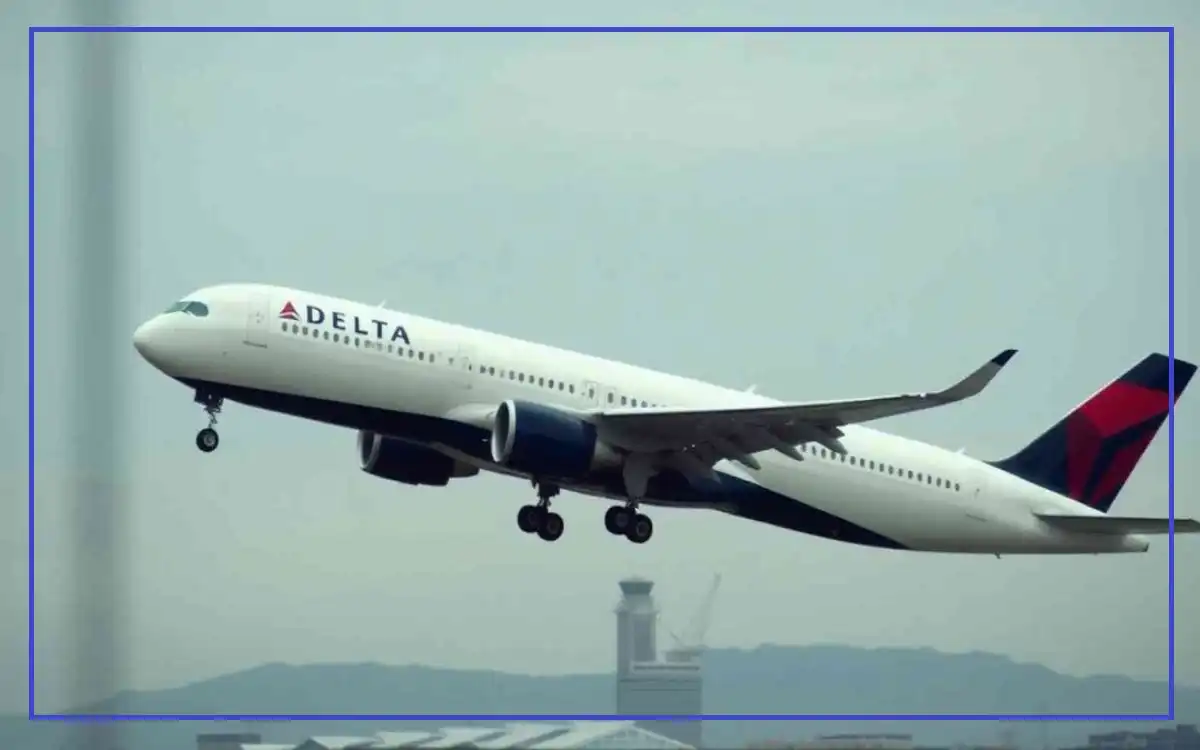
Delta flight DL275 Diverted Lax
There was a recent diversion of Delta flight DL275 Diverted Lax which demonstrated the importance of learning from aviation technology meltdowns. What happened and how responders mitigated it from escalating is an engineering and technology open case study.
Delta flight DL275 Diverted Lax Incident Details
On May 28, 2025, passengers boarded Delta flight DL275, Diverted from LAX at Detroit Metro Airport, headed for Tokyo aboard an Airbus A350-900. While the aircraft was flying over the central part of the Pacific Ocean, approximately halfway to its destination, one of the engines, a Rolls-Royce Trent XWB, malfunctioned in its anti-icing system.
The flight crew, always a safe choice for professionals, diverted the aircraft to Los Angeles International Airport (LAX) and landed exactly 12 hours later at 1:08 AM local time. Delta was able to keep the diversion to the passengers at zero. Consequently, Delta rebooked the passengers.
The case of Delta flight DL275 Diverted Lax is an excellent example of the failure of technical systems, and of the delights of doing a line study of the technical systems to the max. What did the diversion study?
The Diversion – Delta flight DL275 Diverted Lax
The anti-ice system is designed to prevent the buildup of ice on the engines, which occurs in frigid and high-altitude air. A malfunction of an anti-icing system is a high-altitude risk that cannot be taken.
Air traffic control monitoring systems sensed the icing system malfunction approximately five hours into the flight. According to operational procedures, the flight crew is required to divert and land instead of attempting an over-the-ocean flight.
In a high-altitude, over-water situation, the engine failure cannot is a risky situation, which is precisely what Delta had to do in this case, and it is an example of the importance of design redundancy when it comes to limits.
Key Technological Subsystems Involved
The advanced Airbus A350 incorporates the newest engine system, the Rolls-Royce Trent XWB, which is entirely controlled by electronic systems.
Anti-ice features use the engines’ bleed air systems.
If a valve or sensor malfunctions, the system displays the issue to the pilots. There are backup systems, but pilots tend to play it safe.
Here, students are taught integrated flight management systems that track thousands of metrics simultaneously.
TIMELINE OF EVENTS – Delta Flight DL275 Diverted Lax

| Time (Approx.) | Event | Tech Role |
| Departure (Detroit) | Flight DL275 leaves for Tokyo | Auto takeoff systems engage |
| +5 Hours (Pacific) | Anti-ice anomaly detected | Sensors trigger warnings |
| +6 Hours | Diversion to LAX decided | Flight computers recalculate route |
| +12 Hours | Safe landing at LAX | Autoland prep and emergency standby |
| Post-Landing | Inspections and rebooking | Ground tech diagnostics run |
This table summarizes the technological support for each step of the diversion to LAX on Delta flight DL275 Diverted Lax.
LESSONS WITH SENSORS
Among the various features of aircraft technology, sensors are undoubtedly the most important. On DL275, the sensors detected a malfunction and solved a potential issue.
Students find the interaction of sensors that measure vibrations, temperature, and pressure to be of great importance. Control software streams prevent erroneous positive results.
These systems, along with the integrated aircraft health monitoring system, provide docking data to the airline after the aircraft lands.
ROLE OF FLIGHT MANAGEMENT SYSTEMS
The A350 flight management computer (FMC) managed the diversion seamlessly.
For example, fuel calculations, weather information, and alt LAX alternates.
Pilots enter the diversion, and the system recalculates the plan. This feature minimizes the risk of human error in high-stress situations.
Students of aviation understand the GPS, inertial navigation, and satellite communications that make precise diversions possible.
Design and Redundancy of Engines
Each Rolls-Royce Trent XWB engine has two anti-ice systems, one for each engine. The Delta flight DL275 Diverted Lax damage was contained, and the plane remained flyable.
Redundancy means that when one component fails, an alternative component activates. This approach is applied to every system in an aircraft.
Designing these tough components involves using finite element analysis taught in the tech classes.
Tech Simulators and Pilot Training
Pilots rehearse scenarios with engine failures and diversions on A350 DL275 full-motion simulators.
Pilots must perform these scenarios countless times, so these simulators are equipped with genuine A350 software to help pilots respond in a calm and efficient manner.
Students are now able to experience virtual reality simulators that are making their way into training programs for even more immersion.
Ground Maintenance and Crew
Delta flight DL275 Diverted Lax staff used their diagnostic instruments to evaluate the engine. Portable scanners assess the presence of ice and damage.
Augmented reality overlays are sometimes used for maintenance on Boeing and Airbus manuals. Crews completed the maintenance efficiently.
This illustrates to the students the integration of technology from the flight to the hangar.
Aviation Safety and Data Analytics
After the incident, Delta transmitted the flight data from the black box recorders to the airline’s systems.
AI learns patterns to eliminate repetitive occurrences.
Predictive maintenance applies machine learning to sensor log data, and DL275 data now helps train improved models.
Engineering students understand big data’s impact on the reduction of incidents over the years.
Human-Machine Interface Training
A350 cockpit displays provide unambiguous warnings using a multi-sensory approach. In Delta flight DL275 Diverted Lax, nothing was ignored by the pilots.
Good UI design reduces the risk of information overload. The evolution of touchscreens and voice command assists provides safer options.
Operational systems interfaces are thoroughly described in the technical literature so that the crew can use the systems.
Tech Impact on Passenger Experience
Apps and in-seat screens provided passengers with real-time information while in-flight. Delta’s system provided post-landing real-time text notifications.
In-flight Wi-Fi showed the current status. This feature helps to reduce anxiety during events like a Delta flight DL275 Diverted Lax.
For more details, visit inter-net-chicks.com
About the Author